
Every few years, someone predicts the death of SEO.
First, social media was supposed to replace search.
Then mobile apps.
Then voice assistants.
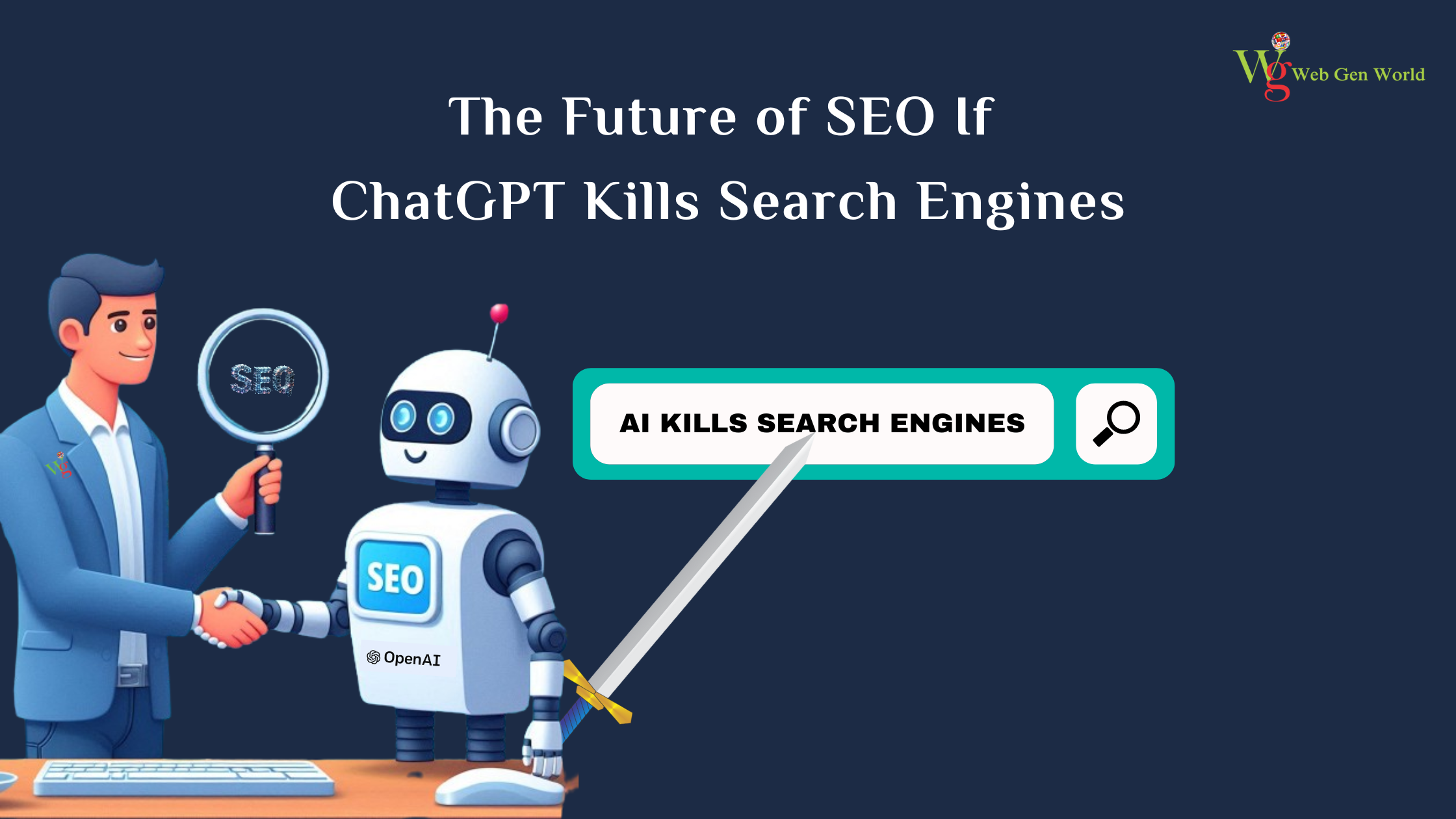
Now the latest prediction is AI.
With AI-powered search experiences becoming more common across platforms like Google Search, ChatGPT, and Perplexity AI, many website owners are asking the same question:
Is SEO finally dead?
The short answer is no.
SEO is not dead.
But some SEO strategies may be entering their most difficult period yet.
The real discussion is not whether people will stop searching.
People will continue searching.
The bigger question is:
If AI increasingly rewards trust, authority, and established sources, how do new websites get the opportunity to become trusted sources themselves?
That question may shape the future of search more than any ranking factor update.
Who Should Read This?
- Bloggers
- Affiliate marketers
- Niche website owners
- SaaS founders
- Local businesses
- SEO professionals
- Content creators
- Anyone considering starting a website in 2026
Key Terms Explained
SEO (Search Engine Optimization): The practice of improving a website’s visibility in search engines.
AI Search: Search experiences that generate answers instead of only displaying links.
Google AI Mode: Google’s AI-powered search experience that provides conversational answers and follow-up interactions.
AI Overviews: AI-generated summaries that appear directly within Google Search results for certain queries.
AEO (Answer Engine Optimization): Optimizing content so AI systems can understand, reference, and cite it in answers.
GEO (Generative Engine Optimization): Improving visibility within AI-generated responses and generative search platforms.
What This Article Is Not Saying
This article is not claiming:
- SEO is dead.
- Websites are disappearing.
- AI will replace all publishers.
- New websites cannot succeed.
Instead, it explores how AI search may change the economics of publishing and visibility.
Quick Answer: Is SEO Dead?
No.
People still search for:
- Products
- Services
- Reviews
- Tutorials
- Comparisons
- Local businesses
- News
- Research
Search demand has not disappeared.
Businesses still need visibility.
Users still need information.
AI systems still need sources.
Without websites, publishers, researchers, companies, and creators producing information, AI systems would have far less content to learn from and reference.
So the idea that websites become completely irrelevant is unrealistic.
However, saying “SEO is not dead” is only part of the story.
Because something important is changing.
The relationship between information and traffic is changing.
And that matters for every website owner.
What Has Actually Changed?
For more than two decades, search worked in a relatively predictable way.
A user searched for something.
A search engine displayed links.
The user clicked a website.
The website received traffic.
The business earned revenue.
The model looked like this:
Search → Website → Click → Revenue
AI-powered search is introducing a different flow:
Search → AI Answer → Optional Click
That one change may sound small.
Economically, it is significant.
Because websites only receive traffic when users click.
If users receive complete answers before clicking, fewer visits are required to satisfy the same information demand.
The demand for information remains.
The number of clicks may decrease.
The Rise of Content Compression
One useful way to understand AI search is through a concept we can call:
Content Compression
Content Compression happens when AI combines information from multiple sources into a single answer.
Think about how people researched information ten years ago.
If someone wanted to learn about SEO, they might visit:
- Multiple blogs
- Several YouTube videos
- Industry forums
- Official documentation
Today, an AI system can summarize information from many sources in seconds.
The user receives information faster.
The user often visits fewer websites.
The same knowledge is consumed.
But fewer publishers may receive traffic.
This is one reason why many website owners are concerned about AI search.
The internet is not necessarily producing less information.
Users may simply need fewer clicks to access it.
The Real Debate Nobody Wants to Talk About
Most discussions about AI search focus on tactics.
People ask:
- How do I rank in AI search?
- How do I optimize for AEO?
- How do I appear in AI-generated answers?
- How do I get cited by AI systems?
Those are useful questions.
But they may not be the most important ones.
The bigger question is:
If everyone has access to the same AI tools, who actually wins?
Because the competition is no longer:
Traditional SEO vs AI
The competition is increasingly:
Established brands using AI vs new websites using AI
And that creates a very different challenge.
Why Established Brands Start With a Huge Advantage
Imagine two companies.
Company A has been publishing online for fifteen years.
Company B launched six months ago.
Both companies use AI.
Both understand SEO.
Both create high-quality content.
Both optimize for AI search.
Who starts with the advantage?
Most likely Company A.
Not necessarily because its content is better.
Because it has accumulated trust signals over time.
Large websites often have:
- Brand recognition
- Backlinks
- Citations
- Mentions
- Reviews
- Existing audiences
- Historical authority
These signals did not appear overnight.
They were built over years.
If AI systems increasingly rely on credibility and authority signals, established organizations begin the race much further ahead.
That does not mean newcomers cannot succeed.
It means the starting conditions are different.
But If AI Rewards Authority, How Can New Websites Ever Become Authorities?
This may be one of the most important unanswered questions in modern search.
Every trusted website started as an unknown website.
Every respected brand was once a newcomer.
Every authority had zero backlinks at some point.
So what happens if visibility increasingly concentrates around existing authorities?
How do future authorities emerge?
The honest answer is:
Nobody fully knows yet.
This is one reason the future of AI search remains uncertain.
The issue is not simply rankings.
The issue is whether newer publishers receive enough visibility to become tomorrow’s trusted sources.
At the same time, history suggests that new authorities continue to emerge whenever new markets, technologies, regulations, or consumer behaviors create information gaps.
Many of today’s trusted websites became authorities because they entered categories that established players had not yet fully served.
AI may raise the importance of trust and authority signals, but it does not eliminate opportunities for newcomers.
In emerging industries, there may be no established authority yet. The businesses that develop genuine expertise, original research, and practical experience in those areas can still become the trusted sources of the future.
The Uncomfortable Truth About “Create Great Content”
For years, the standard SEO advice was:
Create great content.
That advice still matters.
But today we need to ask a harder question:
What Happens When Everyone Can Create Great Content?
Ten years ago, publishing hundreds of articles required significant resources.
Today, AI tools dramatically reduce content production costs.
As a result:
- More content is being published.
- More websites are competing.
- More businesses are entering search.
Quality remains important.
But quality alone may no longer be enough.
Quality increasingly becomes the baseline expectation.
Not necessarily the differentiator.
The Economics of Infinite Content
One of the biggest changes AI introduces is economic.
Before AI, content creation had natural limits.
Research took time.
Writing took time.
Editing took time.
Publishing took time.
AI lowers many of those barriers.
The supply of content increases.
Competition increases.
Basic economics suggests that when supply grows rapidly, individual assets often become less valuable.
That does not mean content becomes worthless.
It means content alone becomes a weaker moat.
And that distinction matters.
Not All Search Is Equally Vulnerable to AI
One important distinction often gets overlooked in discussions about AI search.
Not all search queries serve the same purpose.
Informational searches are often the easiest for AI systems to answer directly.
- What is SEO?
- How does DNS work?
- What is a CRM?
- How do backlinks work?
In many of these cases, users may receive enough information from an AI-generated answer without needing to visit a website.
However, transactional and commercial-intent searches operate differently.
- Best CRM for small business
- SEO agency near me
- Payroll software pricing
- Dentist in Hyderabad
- Best accounting software for freelancers
These searches often involve evaluation, comparison, trust, pricing, reviews, or purchasing decisions.
Even if AI helps users narrow options, many people will still need to visit websites before making a decision.
This suggests that informational content may experience more pressure from AI-generated answers than transactional or service-oriented content.
The long-term balance remains uncertain, but treating all search categories as equally affected may oversimplify what is actually happening.
What This Means for Different Types of Website Owners
Most discussions stop at theory.
Let’s make it practical.
If You Run an Informational Blog
This is probably the group facing the most uncertainty.
If most of your traffic comes from answering straightforward informational questions, AI-generated answers may create pressure.
Focus on:
- Original research
- Unique expertise
- First-hand experience
- Case studies
- Industry insights
The more replaceable the content is, the greater the risk.
If You Run a SaaS Company
Content remains valuable.
But the purpose may shift.
The goal is not only traffic.
The goal is also:
- Brand awareness
- Product discovery
- Customer acquisition
- Trust building
Even if informational traffic changes, content can still support business growth.
If You Run a Local Business
Many local businesses may remain relatively resilient.
Users searching for:
- Dentists
- Restaurants
- Lawyers
- Consultants
- Contractors
Still need a real service provider.
AI may change discovery.
But it cannot replace the underlying service.
If You Are Launching a New Website
Be realistic.
Competing directly against large established publishers using generic informational content is becoming increasingly difficult.
Look for advantages that are harder to copy:
- Expertise
- Relationships
- Community
- Proprietary data
- Products
- Experience
These assets may become increasingly important.
Real-World Examples We Are Already Seeing
This discussion is no longer theoretical.
Some publishers have already publicly discussed AI search concerns.
Chegg’s Public Dispute With Google
In 2025, Chegg publicly challenged Google’s AI search practices and argued that AI-generated search experiences were reducing traffic to publishers. Reports covering the dispute highlighted concerns that AI-generated answers may satisfy users before they visit source websites.
Regardless of where someone stands on the dispute, it demonstrates that large publishers are actively discussing the traffic implications of AI-powered search.
Publisher Concerns Around AI Overviews
Multiple industry reports have discussed concerns from publishers about declining click-through rates when AI-generated summaries appear directly within search results. Some publishers argue that users increasingly receive answers without needing to visit the original source.
The long-term impact remains unclear.
However, the discussion has become serious enough that publishers, SEO professionals, and media companies are actively monitoring traffic changes.
Research Is Beginning to Measure Traffic Impact
Academic and industry research is now attempting to measure how AI-generated search summaries influence user behavior and website traffic. Early studies suggest informational content may face greater pressure than transactional or service-oriented content.
The research is still evolving.
But the topic is moving from speculation toward measurable analysis.
The 7 Moats of the AI Search Era
If content becomes easier to create, what remains difficult to replicate?
1. Content
Still important.
But increasingly accessible.
2. SEO
Useful.
But many optimization techniques can be copied.
3. Backlinks
Valuable trust signals.
Less unique than they once were.
4. Brand
Increasingly important.
Strong trust signal.
Brand strength may become even more important in an AI-driven search environment.
As AI systems answer more generic informational queries, users may increasingly seek out trusted brands directly rather than relying solely on search rankings.
Someone searching for an SEO study may specifically look for Ahrefs. Someone researching email marketing may search for HubSpot. Someone comparing financial products may search for NerdWallet.
In that environment, brand recognition becomes more than a marketing asset. It becomes a discovery mechanism.
The stronger the brand, the less dependent a business may be on any single search feature, algorithm update, or AI-generated result.
5. Community
Creates loyalty.
Hard to manufacture quickly.
6. Proprietary Data
Original research, benchmarks, and datasets.
Extremely valuable.
7. Product Ecosystem
Products, services, tools, and customer relationships.
Often the strongest long-term moat.
Three Realistic Scenarios for the Next 3–6 Months
Nobody knows exactly what happens next.
But these scenarios appear realistic.
Scenario 1: Moderate Change
AI search expands.
Traffic declines remain manageable.
Most publishers adapt without major disruption.
Scenario 2: Informational Traffic Pressure
More informational queries receive direct AI answers.
Publishers experience noticeable click reductions.
Competition intensifies.
Scenario 3: Hybrid Search Becomes Normal
Users rely on AI for quick answers.
They still visit websites for:
- Research
- Comparisons
- Reviews
- Deep expertise
- Community discussions
This may be one of the more balanced near-term outcomes.
Expert Commentary: My Current View
After examining the current direction of AI search, I do not believe the biggest risk is that SEO disappears.
The bigger risk is that the economics of publishing change.
Historically, many websites succeeded because traffic itself was valuable.
AI introduces a different dynamic.
The answer may increasingly appear before the click.
In many cases, information itself may become less valuable as a standalone product and more valuable as a marketing asset.
Content increasingly supports brand building, trust, product discovery, lead generation, and customer acquisition rather than serving purely as a traffic-generation mechanism.
That may be one of the most important strategic shifts created by AI search.
At the same time, content production becomes easier.
As a result:
- Content supply increases.
- Competition increases.
- Attention becomes harder to earn.
- Authority becomes more important.
This does not mean new websites cannot succeed.
But it may mean that generic informational content becomes a weaker business model than it was several years ago.
The strongest opportunities may increasingly involve:
- Expertise
- Research
- Community
- Products
- Services
- Original data
In other words:
The advantage may come less from publishing information and more from creating something information alone cannot replace.
Frequently Asked Questions (FAQ)
Is SEO dead because of AI?
No.
SEO is evolving rather than disappearing.
People still search, businesses still need visibility, and AI systems still require information sources.
Will AI replace websites?
No.
AI systems depend on information created by websites, publishers, businesses, researchers, and creators.
Without sources, AI-generated answers become weaker.
Will informational websites lose traffic?
Some publishers have already reported concerns about traffic changes associated with AI-generated search experiences.
However, the impact varies significantly by niche, query type, and business model.
Do large brands have an advantage in AI search?
In many situations, yes.
Established brands often have stronger authority signals, larger audiences, more citations, and longer track records.
Can a new website still succeed?
Yes.
But relying entirely on generic informational content may become more challenging.
Unique expertise, original research, products, services, and community-building may become increasingly important.
What is AEO?
AEO stands for Answer Engine Optimization.
It focuses on making content easier for answer engines and AI systems to understand, reference, and cite.
What is GEO?
GEO stands for Generative Engine Optimization.
It focuses on improving visibility within AI-generated responses and generative search experiences.
The Questions Nobody Has Good Answers For Yet
Some of the most important questions remain unresolved.
If AI learns primarily from existing authorities:
How do future authorities emerge?
If AI-generated answers satisfy users directly:
How should publishers be rewarded for creating the information being used?
If content becomes abundant:
What becomes the true competitive advantage?
These questions do not yet have clear answers.
But they may become some of the most important questions in the future of search.
What Website Owners Should Do Right Now
- Build topical expertise.
- Publish original insights.
- Create case studies.
- Build an email list.
- Develop a recognizable brand.
- Create proprietary data when possible.
- Focus on solving real problems.
What AI Cannot Easily Replace
If AI can summarize information, what remains valuable?
- Original research
- Personal experience
- Case studies
- Industry relationships
- Proprietary data
- Communities
- Products and services
The easier something is to summarize, the easier it may become for AI systems to compress it into an answer.
The harder something is to replicate, the more valuable it may become.
What AI Search Still Cannot Create
The article touches on this near the end, but it deserves more emphasis.
AI can summarize.
AI can remix.
AI can synthesize.
But AI cannot easily create:
- Original datasets
- New experiments
- Customer relationships
- Communities
- Industry networks
- Real-world experience
- Proprietary products
- Firsthand observations
Those are increasingly becoming the raw materials from which AI-generated answers are built.
In that sense, AI may actually increase the value of genuine expertise while decreasing the value of generic content.
Final Thoughts
SEO is not dead.
Search is not disappearing.
Websites are not becoming irrelevant.
But the environment is changing.
AI search makes information easier to access.
At the same time, it may make attention harder to earn.
For established brands, AI may amplify advantages that already exist.
For newcomers, success may increasingly depend on building assets that are difficult to copy:
- Expertise
- Community
- Original data
- Products
- Relationships
- Trust
The future of SEO may not belong to the websites that publish the most content.
It may belong to the organizations that create the most unique value.
And that is a very different challenge from the one SEO solved over the last twenty years.